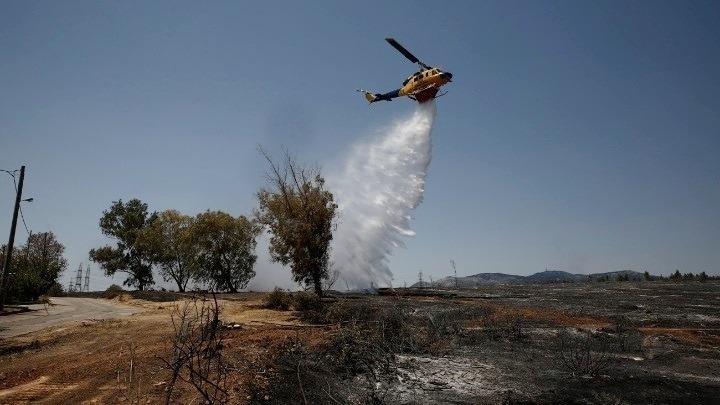
Weather conditions leading to deadly wildfires in Greece, Türkiye, and Cyprus and are made 10 times more likely due to climate change, according to a study by World Weather Attribution in the three countries published on Thursday.
The study included 28 researchers from World Weather Attribution, including scientists from universities in Greece, Türkiye, the Netherlands, Sweden, Denmark, the United Kingdom, and the United States. Researchers from Greece included scientists at the Polytechnic of Crete, the National Observatory of Athens, and the Institued of Mediterranean Forest Ecosystems/ELGO Demetra.
In July 2025, Greece, Türkiye and Cyprus experienced one of the most devastating months of wildfires in recent years, fueled in Greece by a record heatwave above 45C, drought, and strong winds.
Researchers, who confirmed that 2025 was the worst year recorded in Europe for fires (more than 1 million hectares burned) also found that climate change has made the weather conditions leading to the catastrophic fires of June and July (2025) 22% more intense, a rate that will rise as the use of fossil fuels continues and as human-created climate change activities affect weather conditions.
Among the findings, scientists found that Türkiye, Greece and Cyprus are exposed to different types of wildfire events and impacts.
While Türkiye and Greece face similar challenges with large-scale fires that can span multiple provinces, large summer tourist populations and fire-conducive environments, the wildland urban interface in Turkiye is mainly in coastal tourist areas and inland forest villages. In Greece, on the other hand, the risk is particularly high in dense island settlements and in the Attica suburbs, presenting different firefighting and evacuation challenges. Cyprus faces concentrated risks due to its small size and reliance on aerial support for large fires.
The study also referred to the dryness of months leading up to the wildfires, and the strain on EU Civil Protection Mechanism resources trying to help EU countries with simultaneous fires. It also referred to countries’ efforts to strengthen wildfire management and response, and called for further public awareness campaigns on wildfire risks and fire safety behaviors.
(For more information, please see https://www.worldweatherattribution.org/)
