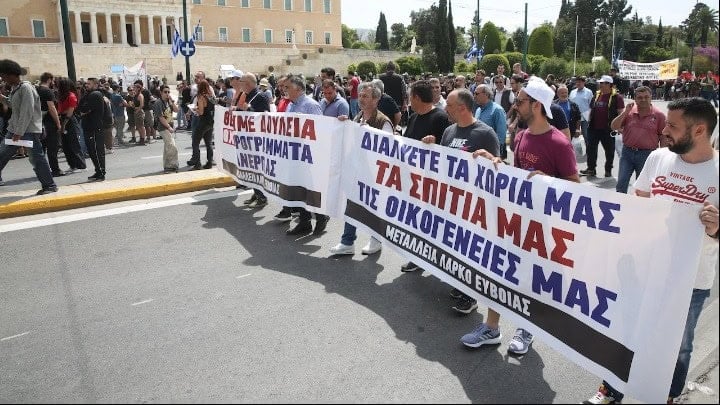
In a dramatic show of public dissent, thousands of workers across Greece mounted a nationwide general strike on Wednesday, bringing transport, public services, and commerce to a near standstill. The rally was the focal point of outrage over proposed labor-law changes that many fear will erode workers’ rights and intensify exploitation.
The Spark: New Labour Reforms Under Fire
At the heart of the unrest lies a controversial government proposal to extend permissible working hours and loosen restrictions on overtime. Under the draft legislation, occasional shifts of up to 13 hours could become legal, with overtime capped at 150 hours per year, and a 48-hour workweek ceiling.
Labor unions accuse the government of attempting to mask regressive changes as “flexibility,” arguing instead that the reforms will pave the way for modern workplace abuses. The General Confederation of Workers of Greece (GSEE) and allied unions have called the draft law “a regression in workers’ rights.”
Nationwide Disruption
The strike’s impact rippled across sectors:
- Transport halted: Ferries were tied up at ports; train and metro lines in Athens ceased operations.
- Public services scaled back: Schools, municipal services, courts, hospitals, and civil service offices were either closed or operated with skeleton staff.
- Rallies in major cities: In Athens, the main demonstrations gathered in Klafthmonos Square (scheduled at 11:00 a.m.) and Propylaia (10:30 a.m.).
- Voices from the crowd: Protesters circulated slogans against the “13-hour day,” demanded reinstatement of collective bargaining, and denounced the reforms as an attack on dignity and work-life balance.
In interviews, union leaders emphasized that the measure would intensify precarity for low-income workers, making it harder to push back against exploitative practices.
Political and Social Undercurrents
Though the strike was rooted in domestic labour concerns, other grievances surfaced in the demonstrations. Many protesters displayed Palestinian flags and chanted slogans referencing the Gaza conflict, linking their struggle to broader issues of global justice and solidarity.
Politically, the strike underscores growing disaffection with the ruling conservative government led by Prime Minister Kyriakos Mitsotakis. Critics say the reforms betray campaign promises on social protection and risk undermining already fragile social cohesion amid economic pressures.
Aftermath & What’s Next
Though the government insists the reforms are essential to modernize labor markets and boost competitiveness, union leaders vow to escalate their resistance if the draft bill advances in parliament.
Analysts suggest several possible trajectories:
- Further industrial action: Unions may organize rolling strikes or sector-specific stoppages to pressure lawmakers.
- Legislative pushback: Opposition parties may attempt to delay or amend the bill, especially if public sentiment is strongly mobilized.
- Negotiation window: There’s still potential for forced compromise — e.g. limits on 13-hour shifts, clear guidelines on overtime, and protections for vulnerable workers.
For now, 1 October 2025 will likely be remembered as one of the most forceful labour uprisings in recent Greek memory -a test of the balance between reform ambition and social consent.
