When Hamas offered a conditional “yes, but” to the U.S.-sponsored peace proposal—accepting some terms like releasing hostages but rejecting key demands such as disarmament—Israel’s reaction was swift, multifaceted, and laced with tension between diplomacy and force.
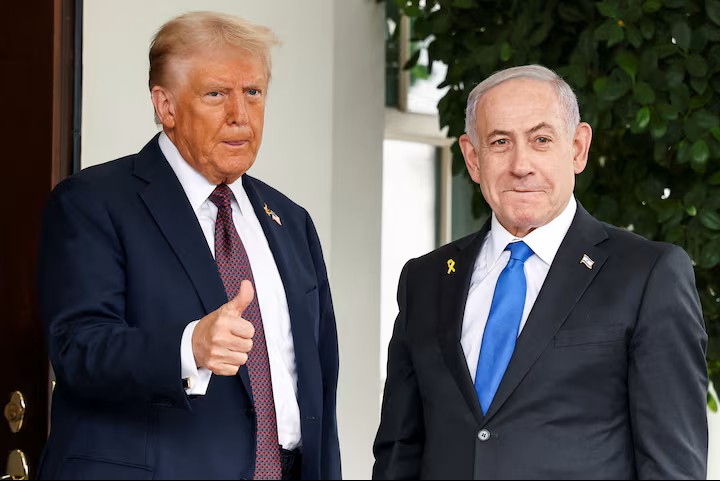
A Cautious Opening — Mixed Signals from Jerusalem
Immediately after Hamas’s statement, Israel’s leadership projected a readiness to act—but only on Israel’s terms. The Prime Minister’s office announced that the military was “preparing for the immediate implementation of the first stage” of the U.S. plan (i.e. hostage release).
However, this willingness was couched with caveats: Israel insisted that any process must remain aligned “with the principles set out by Israel,” signaling it would not accept modifications that undermined its core demands (notably, the disarmament of Hamas).
Thus, Israel’s posture combined conditional diplomatic openness and firm non-negotiables.
Renewed Vows: Disarmament, Hostages, Ultimate Defeat of Hamas
In parallel with diplomatic signals, Israeli leaders reiterated their core war aims emphatically:
- Prime Minister Netanyahu vowed to disarm Hamas and insisted that the group must either surrender control or face destruction.
- The government insists that hostage release cannot come without full compliance on Israel’s strategic demands.
These reaffirmations show Israel was trying to balance opening a pathway for negotiation against appearing weak or compromising its maximalist aims.
Restraint or Continued Pressure?
The reaction wasn’t wholly about escalation. Having publicly committed to implementing the first phase of the plan, Israeli authorities signaled some willingness to restrain the offensive—at least in appearance—to allow negotiations to proceed.
Still, significant skepticism remained. Hamas’s refusal to commit to disarmament remained a red line for Israel; its acceptance of other provisions was viewed as insufficient.
In short: Israel indicated it might ease military pressure in pockets to facilitate dialogue, but would keep strategic and operational leverage in reserve until key demands were met.
Domestic Tensions and Coalition Pressure
Israeli domestic politics complicated the reaction. Netanyahu’s far-right coalition includes ministers who oppose any deal that allows Hamas to retain influence—even under limited or transformed structures.
There exists a strong faction within the government pushing for total military victory rather than negotiated compromise. Navigating that internal pressure while engaging diplomatically posed a difficult balancing act for Netanyahu.
International Pressure & U.S. Push
Externally, the United States—via Donald Trump’s revived peace plan—pressed Israel to halt bombing and open a diplomatic window following Hamas’s partial acceptance.
Israel’s reaction was cautious: it accepted cooperation under the plan’s framework but resisted demands to unilaterally suspend military operations or fully withdraw unless Hamas yielded on other core terms.
Thus Israel’s approach tried to thread the needle: responding positively to international mediation, but refusing to give up leverage or soften its strategic posture.
Looking Forward: Possible Trajectories
Based on Israel’s initial reaction, several likely paths emerge:
- Incremental implementation
Israel may begin limited hostage releases in parallel with selective easing of military actions—conditional on Hamas’s continued compliance in subsequent stages. - Negotiation under threat
The offer is inherently backed by the pressure of force: any step toward diplomacy remains shadowed by the threat of resumed or intensified military operations should Hamas default. - Breakdown and escalation
If Hamas refuses to budge on disarmament or structural control, Israel may pivot back toward full-scale operations to eliminate or dismantle Hamas’s command capabilities. - Domestic political pivot
Internal cracks in Netanyahu’s coalition could either push him toward a harder line or force him to accept compromises to maintain stability.
